"He must turn from evil and do good; he must seek peace and pursue it."
1 Peter 3:11
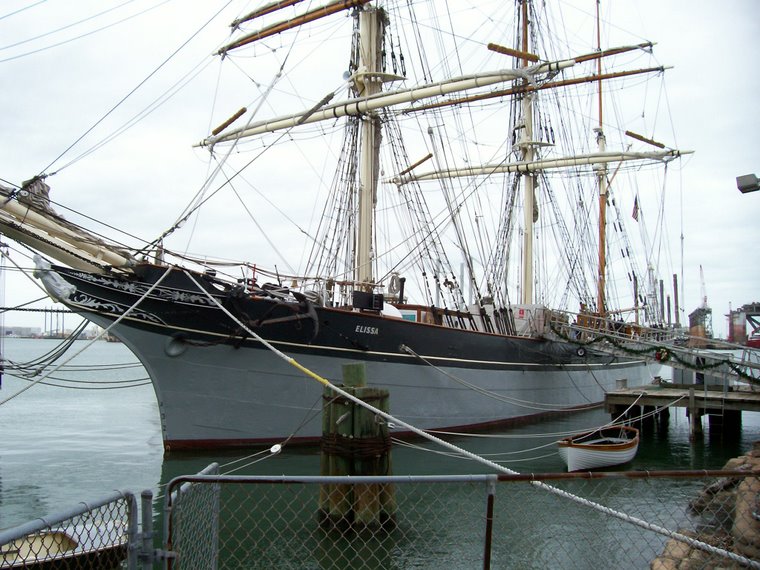
I have a great nautical adventure story in Good Hope, but all of my scenes and sequels depend on one specific turn- the hero of the story has to get on the Elissa in the first place. In earlier drafts my readers were entertained with the story, but when it came to the simple act of the hero committing to a year-long adventure of sailing to the Cape of Good Hope on a Nineteenth Century square rigger, no one was buying it.
So, I've researched the topic of motivation, and I'd like to present to you what I think are the Top 10 Reasons we do the crazy things we do. And I’m not talking about Maslow’s Hierarchy of Needs here. My audience for Good Hope likely has shelter, a toilet, access to food, and possibly sex on a somewhat regular basis, so that list didn’t help me at all.
For my purposes, I started with the bias that all motivations occur in two simple camps- we are either moving away from something (Avoidance), or moving toward something (Pursuit). There is a third camp, but I will reveal that at the end.
WHAT WE AVOID:
For my purposes, I started with the bias that all motivations occur in two simple camps- we are either moving away from something (Avoidance), or moving toward something (Pursuit). There is a third camp, but I will reveal that at the end.
WHAT WE AVOID:
1.We Avoid Pain. Pain can be inflicted physically, mentally, or verbally. We avoid situations where our lives are threatened, our physical body could be harmed or our mental well being is compromised. In effect, we run away from death physically, emotionally, and spiritually.
2.We Avoid Fear and Uncertainty. We don’t walk into a barn that looks like it could fall down. We run from the dark hallway to the lighted kitchen when we get up in the middle of the night. We run away from the idea of death. If we are not certain of the outcome, we may avoid making a choice either because we fear a possible outcome, or the uncertainty of success paralyzes us.
3.We Avoid Judgement. And we avoid those that are under judgment. We tend to avoid those who persecute or judge us for out beliefs. This item is very similar to fear, but I think you will agree that it has every right to be its own entry.
4. We Avoid Boredom. Even comfort and luxury can be boring. We want something to stimulate us or we do not feel alive.
5.We Avoid Oppression. Don't confuse this one with judgement. We abhor being slaves in the gross sense of the word, or in the lesser sense, we reject restrictions on our life and our liberty.
WHAT WE PURSUE:
2.We Avoid Fear and Uncertainty. We don’t walk into a barn that looks like it could fall down. We run from the dark hallway to the lighted kitchen when we get up in the middle of the night. We run away from the idea of death. If we are not certain of the outcome, we may avoid making a choice either because we fear a possible outcome, or the uncertainty of success paralyzes us.
3.We Avoid Judgement. And we avoid those that are under judgment. We tend to avoid those who persecute or judge us for out beliefs. This item is very similar to fear, but I think you will agree that it has every right to be its own entry.
4. We Avoid Boredom. Even comfort and luxury can be boring. We want something to stimulate us or we do not feel alive.
5.We Avoid Oppression. Don't confuse this one with judgement. We abhor being slaves in the gross sense of the word, or in the lesser sense, we reject restrictions on our life and our liberty.
WHAT WE PURSUE:
1.We Pursue Pleasure. Do I have to explain this one? In all ways, we want to be pleased, fed, satisfied, or sated.
2.We Pursue Acceptance: When you are looking for that shoulder to cry on, whom do you go to? Why, the person most likely to accept you, of course. We want encouragement. We need words of affirmation. We desire recognition for our deeds.
3.We Pursue Excitement: I have included the pursuit of knowledge and understanding in this entry. The new technology, the new movie, the new religion, the new anything is exciting because it helps us feel alive and engaged. We bungee jump. We go back to school. We read a new thriller. We feed our curiosity, because it is exciting.
4.We Pursue Life: The new diet, the new health craze, the new doctor. We don’t want to die, and we are attracted to those things which affirm or contribute to our life and our health. Water is a reflection of life. Think about it. How often do we use water as a decoration in our civilizations? Pools, fountains, falls, wells, beaches, shorelines. All of them symbolize life and we are attracted to them.
5. We Pursue Freedom: I’ve heard it said that you can judge a country based on how many people are trying to get in, and how many people are trying to get out. America still appears to be a land of freedom in that regard, but I wonder for how long?
And what is the third camp I mentioned earlier?
2.We Pursue Acceptance: When you are looking for that shoulder to cry on, whom do you go to? Why, the person most likely to accept you, of course. We want encouragement. We need words of affirmation. We desire recognition for our deeds.
3.We Pursue Excitement: I have included the pursuit of knowledge and understanding in this entry. The new technology, the new movie, the new religion, the new anything is exciting because it helps us feel alive and engaged. We bungee jump. We go back to school. We read a new thriller. We feed our curiosity, because it is exciting.
4.We Pursue Life: The new diet, the new health craze, the new doctor. We don’t want to die, and we are attracted to those things which affirm or contribute to our life and our health. Water is a reflection of life. Think about it. How often do we use water as a decoration in our civilizations? Pools, fountains, falls, wells, beaches, shorelines. All of them symbolize life and we are attracted to them.
5. We Pursue Freedom: I’ve heard it said that you can judge a country based on how many people are trying to get in, and how many people are trying to get out. America still appears to be a land of freedom in that regard, but I wonder for how long?
And what is the third camp I mentioned earlier?
It is the absence of movement- a motivation to do nothing. It is comfort in its negative form or the state at which we have become too comfortable to change, or too comfortable to risk change. This, I think, is the worst and most dangerous motivation of all. The greatest sin among sins is to see a need, and do nothing.
So, once again, I ask my readers to add to this list, come up with your own, or comment. We talked about freedom last time, but now it’s time to get even more personal. What motivates you? What are you running from? What are you running toward? And where in your life do you find yourself sitting on your hands?
So, once again, I ask my readers to add to this list, come up with your own, or comment. We talked about freedom last time, but now it’s time to get even more personal. What motivates you? What are you running from? What are you running toward? And where in your life do you find yourself sitting on your hands?
P.S. And what motivation did I pick for my main character? We are told in seminars and books on writing to create dynamic, vibrant characters that are not one-dimensional, but leap off the page. So, as it turns out, there was not one particular motivation that fit my character, but several. It was a great lesson for me personally, and as a writer. I've found that my own motivations for doing things can be complex and sometimes contradictory. It's what makes me human. In the same way, my main character is motivated out of fear, uncertainty, and boredom, but he also desperately wants excitement and freedom. He is now much more interesting to write about than the one-dimensional character he was in my first draft, and, I must say, he's also much more human.
Gary